GeometryBOX: A Digital Game for Geometry
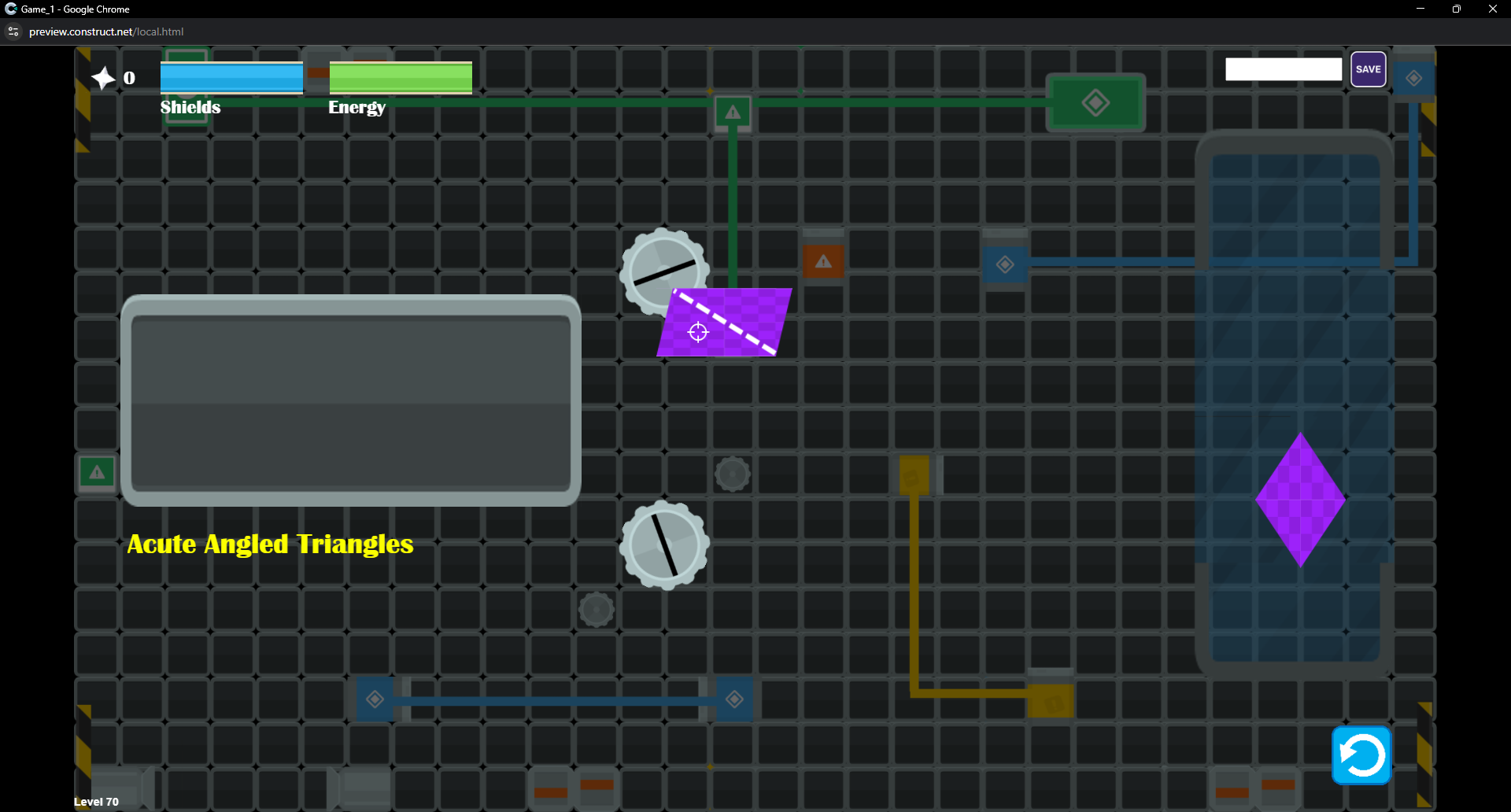
Theory-based educational game design, my Ph.D. thesis project.
Description
How to apply theories of learning and game-design to create educational games? Are such digital games effective in schools? This project aimed to answer these questions using robust evidence. As my Ph.D. dissertation, I conceptualized it; acquired multiple grants to fund it; designed, programmed, and created the game; and tested its effectiveness in a low-middle income school in New Delhi, under the supervision of my amazing supervisor Dr. Adam Dubé.
About the game: A common critique of ineffective learning games is their lack of theory-based design and integration of instructional features. While a few game-design frameworks have been proposed, they tend to take a limited approach. Some do not consider emotional aspects of games; others do not consider links between gameplay and learning. An approach that brings together the multiple aspects of educational game design is needed. This is important to build domain-specific thinking, build connections between gameplay and learning, and tap into the emotional and motivational aspects of games. GeometryBOX is built using an iterative approach to math game design by bringing together decades of previous research. In GeometryBOX, progression of puzzles is based on mathematical complexity (Hiele, 1999), connections between learning objectives and gameplay (Arnab et al., 2015; Ke, 2012), and inclusion of emotional elements (Loderer et al, 2020).
The Study
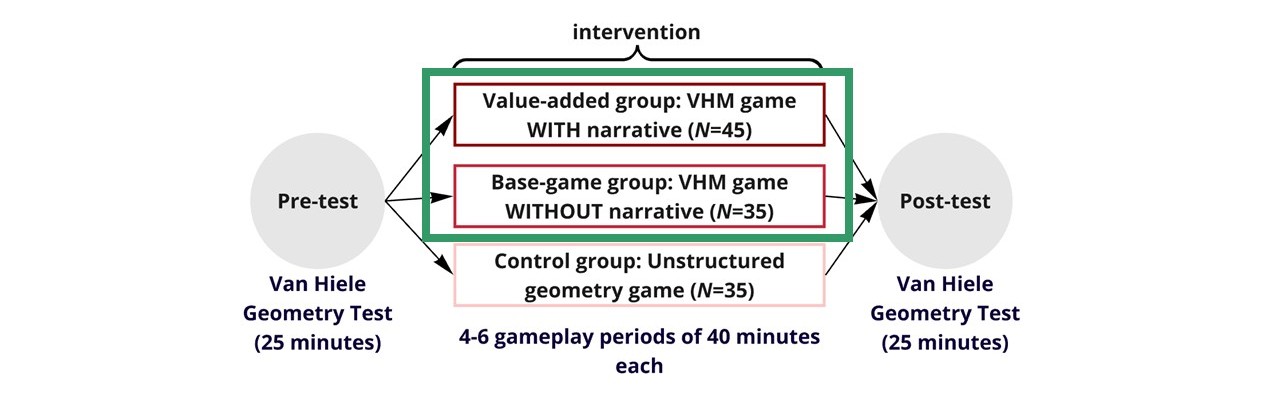
The study focused on the evaluating the effectiveness of digital games to build adolescents’ geometrical understanding. Two versions of a digital game (with and without narrative) were created based on the Van Hiele Model of geometric thinking. Participants (13-14-year-olds, n = 112) played either an unstructured puzzle geometry game (control), the no-narrative VHM game, or the narrative VHM game for 4-6 school periods lasting 40 minutes each. Results show an improvement in performance across all conditions. Group contrast comparisons found that gains were non-significant for the control condition, but significant for the no-narrative and narrative conditions, which had the largest effect. This builds evidence for the positive impact of theory-based educational games and intrinsically integrated “narrative” as an instructional feature of game-based learning.
Value Added Experimental Design
Materials
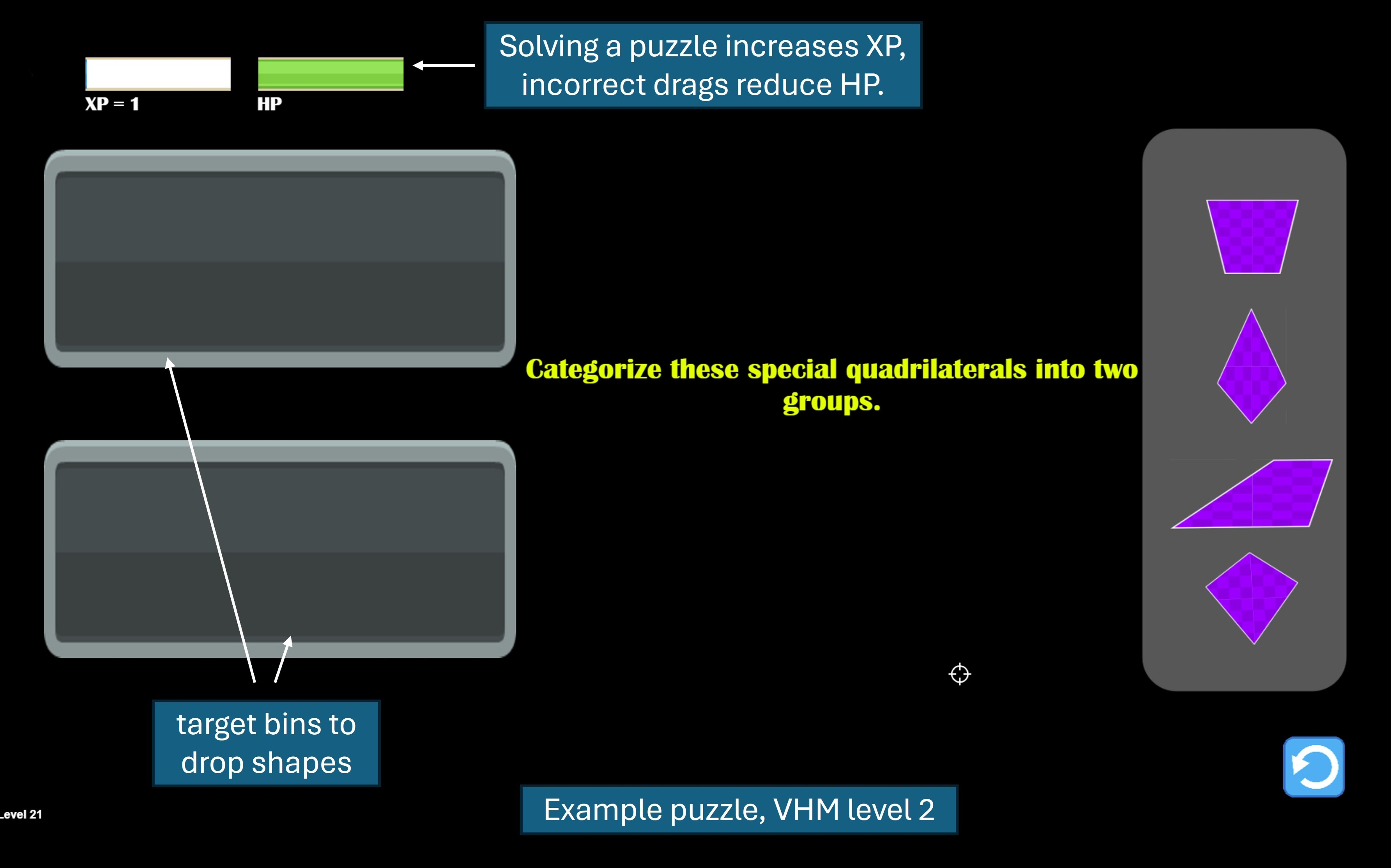
Activities

Workshop: Designing Purposeful Math Games
For 100 pre-service teachers at the Cluster Innovation Centre, University of Delhi on Apr 8, 2026.
Blog: An overview of research on learning games
For Learning Designers Community (LDC) on Aug 29, 2025.

Talk: Serious Games Arcade
Hosted by Concordia University on Jun 6, 2025.
Funding and Support





Team Members
- Robin Sharma — Project Lead, TLC Lab, McGill University
- Adam Dubé — Principal Investigator, TLC Lab, McGill University
- Jyoti Sharma — Data Collection Supervisor, University of Delhi
Publications and Presentations
- Sharma, R. & Dubé, A. (2025). Evaluating the effects of digital math games on mathematical thinking. XXVIIth ISM Graduate Student Colloquium. Université du Québec à Montréal. https://event.fourwaves.com/ism27/schedule/9cb053de-5f60-4894-a2a9-479fe45791b0
- Sharma, R. & Dubé, A. (2025). Impact of theory-based digital games on adolescents’ understanding of geometry [Poster]. AIM (Assessment and Instruction for Mathematics) Collective. Concordia University, Montreal.
- Sharma, R., & Dubé, A. (2025). Effects of theory-based, narrative games on geometry learning among adolescents. American Educational Research Association Annual Meeting, Denver, USA. https://doi.org/10.3102/2185335 https://doi.org/10.3102/IP.25.2185335
- Sharma, R. & Dubé, A. K. (2024). A Systematic Review of Approaches for Building Adolescents’ Geometrical Understanding. In Lindgren, R., Asino, T. I., Kyza, E. A., Looi, C. K., Keifert, D. T., & Suárez, E. (Eds.), Proceedings of the 18th International Conference of the Learning Sciences - ICLS 2024 (pp. 955-958). International Society of the Learning Sciences. http://dx.doi.org/10.22318/icls2024.318074
- Sharma, R., & Dubé, A. (2024). Impact of “narrative” as an instructional feature on adolescents’ understanding of geometry. 34th Annual Meeting of the Canadian Society for Brain, Behaviour and Cognitive Science, University of Alberta, Edmonton. https://www.csbbcs.org/meetings/2024-meeting
- Sharma, R., Lajoie, S., & Dubé, A. (2022). Game design for mathematics education. In S. Selvamari & Sabeena P. S. (Eds.), Mathematics Education: Research and Innovations (pp. 25-37). APH Publishing Corporation. https://www.researchgate.net/publication/364216710_Game_Design_for_Mathematics_Education